

This blog is a gentle guide from one mother to another on breastmilk and breastfeeding.
When I was pregnant, I thought breastfeeding would be the most natural thing in the world. Women have been doing it forever, so I assumed it would come naturally to me, too.
What I didn’t realise is that natural doesn’t always mean easy.
Breastfeeding is both a natural and a learned skill for both mother and baby. It takes patience, adjustment, emotional strength, and sometimes support that many people don’t openly discuss. If you’re reading this as a new mother or preparing to be one, I want to walk you through the basics in the simplest way possible. I’m not an expert. I’m not a doctor. Just a mother who has been there.
Let’s begin.
First, Let’s Understand Breastmilk
Breastmilk is the most magical food. It is living nutrition and adapts to your baby’s needs.
What Makes Breastmilk So Special?
| Component | What It Contains | Why It Is Important |
|---|---|---|
| Water | 85 to 90 percent of breastmilk | Keeps baby hydrated. No extra water needed in first 6 months. |
| Carbohydrates | Lactose, human milk oligosaccharides | Provides energy, supports brain development, builds healthy gut bacteria. |
| Proteins | Whey, casein, antibodies | Supports growth, easy digestion, protects from infections. |
| Fats | Essential fatty acids, DHA | The main source of energy supports brain and eye development. |
| Vitamins | A, E, K, B vitamins | Supports immunity, growth, and overall development. |
| Minerals | Calcium, phosphorus, magnesium, zinc | Strengthens bones, teeth, and body functions. |
| Antibodies | Immunoglobulins, white blood cells | Protects baby from infections and illnesses. |
| Hormones & Growth Factors | Appetite and growth regulators | Supports organ development, sleep regulation, and healthy growth. |
It changes –
- From day 1 to month 6
- During growth spurts
- When your baby is sick
- Even from morning to night
Your body literally studies your baby and adjusts accordingly.
The First Milk: Colostrum
In the first few days after birth, our body produces a thick, yellowish milk called colostrum. It may seem like very little, and many of us, myself included, tend to panic at this stage. But here’s the truth: a newborn’s stomach is tiny and colostrum is highly concentrated and incredibly powerful. It is rich in antibodies and acts as your baby’s first immune protection.
So when milk comes in??
It usually begins around days 3 to 5 postpartum, when your mature milk starts to come in and increase in volume. During this time, your breasts may feel heavy, warm, or full. You might notice some leaking, tenderness, or even engorgement as your body adjusts to your baby’s feeding needs. All this is normal.
Frequent feeding during this phase helps regulate supply and prevent discomfort.
How Breastfeeding Actually Works
Breastfeeding works on demand and supply. The more milk that is removed by baby or pump, the more your body produces.
Isn’t that amazing?
Your body keeps learning and adjusting. It understands how much milk your baby needs and prepares the right amount for the next feed.
Two important hormones are involved in this process.
- Prolactin helps your body produce milk.
- Oxytocin helps release the milk. This is called the let down reflex.
And here is something very important to understand – stress can interfere with let down. When a mother feels anxious, overwhelmed, or unsupported, the milk may not flow easily, even if her body is producing enough!
That is why emotional support during postpartum is important. It directly affects breastfeeding and a mother’s ability to nourish her baby.
What Is a Good Latch?
A good latch means
- baby’s mouth covers more of the areola, not just the nipple
- Lips are flanged outward
- Chin touches breast
- No sharp pain
Mild tenderness in the beginning can happen. But ongoing pain, cracked nipples, or bleeding is not something you have to just tolerate.
Seek help if needed. Lactation consultants exist for a reason.
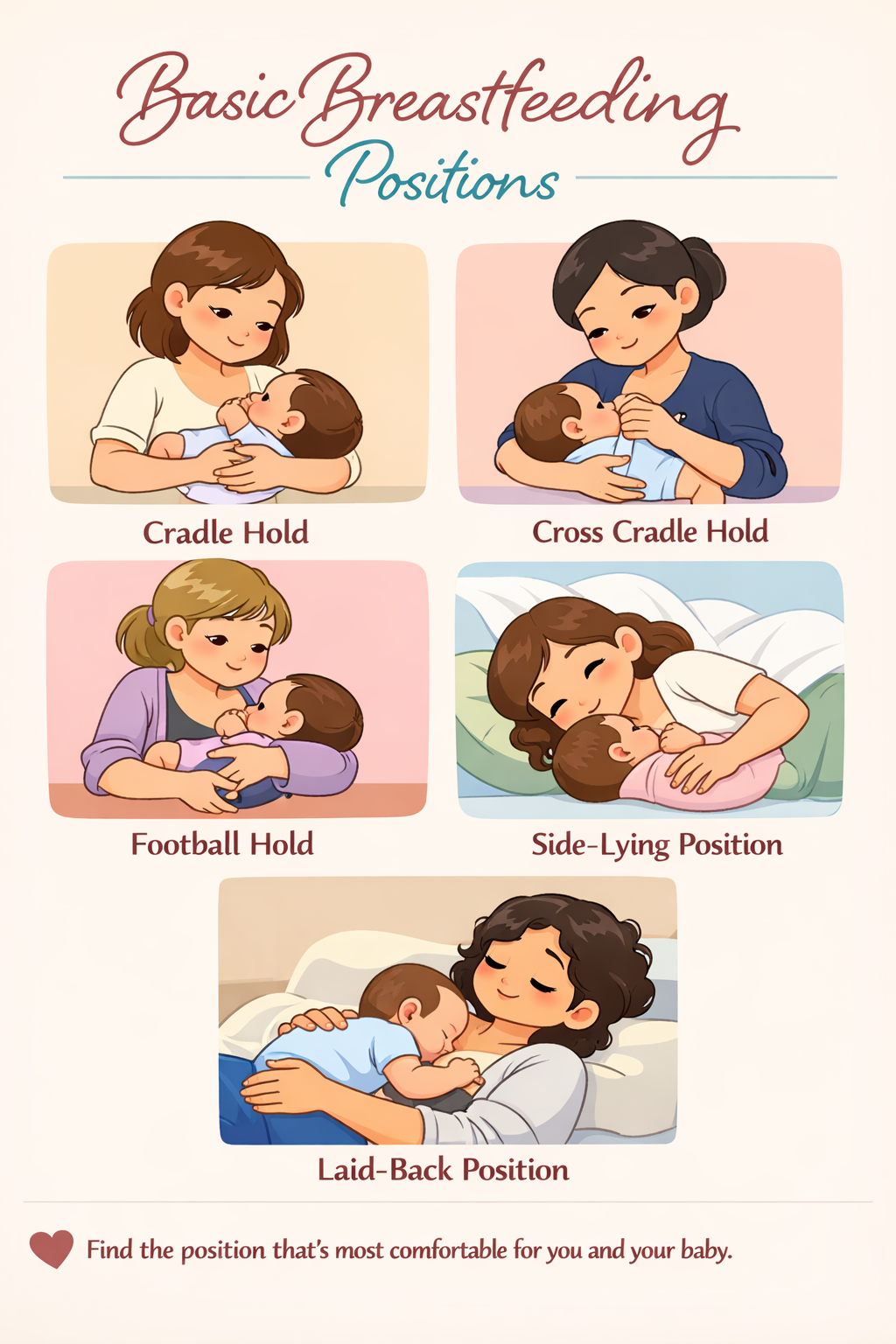
Some Basic Breastfeeding Positions
How Often Should Baby Feed?
Newborns usually feed 8 to 12 times in 24 hours, often every 2 to 3 hours, and sometimes even more frequently. Cluster feeding is completely normal, although it can feel never-ending and exhausting. It does not mean that your milk supply is low. In most cases, it simply means your baby is growing, and their needs are increasing. By feeding more frequently, your baby naturally signals your body to produce more milk, ensuring they receive the right amount of nutrition for their next stage of growth.
How Do You Know Baby Is Getting Enough?
This question haunts every new mother. Keep a track of :
- 6+ wet diapers after day 5
- Regular stools
- Baby seems relaxed after feeds
- Steady weight gain
Crying alone does not equal hunger. Babies cry for many reasons.
The Emotional Side No One Talks About
Breastfeeding can feel beautiful and deeply bonding, yet at the same time overwhelming, exhausting, and even isolating. There may be moments when you feel touched out, frustrated during long feeds, or in tears during endless cluster feeding nights. You can love your baby deeply and still find breastfeeding hard. Both feelings can exist together, and that does not make you a bad mother. It makes you human. 🙂
Challenges in Breastfeeding and You’re Not Alone
Almost every breastfeeding mother faces at least one of these challenges at some point. It could be sore nipples, engorgement, blocked ducts, or even mastitis. Many mothers also struggle with worries about low milk supply or find themselves comparing their journey with other moms. These experiences are far more common than we talk about, and facing them does not mean you are doing anything wrong.
Some common challenges –
Latching – Start with a good latch. Make sure your baby takes a deep mouthful of the breast, not just the nipple. If feeding feels painful beyond the first few seconds, adjust the position. Pain is often a sign that something needs correcting.
Engorgement, blocked ducts, and supply issues – Feed on demand. Avoid long gaps in the early weeks. Frequent feeding helps prevent engorgement, blocked ducts, and supply issues.
Breast fullness, tenderness, or a small lump – Do not ignore early signs of discomfort. If you notice breast fullness, tenderness, or a small lump, address it quickly with feeding, gentle massage, and warm compresses before it worsens.
Sore Nipples – Take care of your nipples. Keep them clean and dry, and use expressed breast milk or a safe nipple cream if they feel sore.
Ask for help, especially during cluster feeding days.
Most importantly, seek support early. A lactation consultant, experienced nurse, or knowledgeable elder can correct small issues before they become bigger problems.
Some mothers exclusively breastfeed.
Some combination feed.
Some pump.
Some switch to formula.
Every journey is different.
Your baby needs nourishment.
But they also need a mentally healthy mother.
Feeding is not a competition.
It’s a relationship.
If you are in the middle of sleepless nights, cluster feeds, or self-doubt, I see you. You are learning something new while healing. And that is a strength.
Very important – if you feel constant piercing pain, if you find yourself crying during feeds, or if your breasts feel unusually heavy and painful, please do not ignore it. If the pain spreads toward your armpits or you notice increasing tenderness, it is a sign that something needs attention.
Please consult a lactation consultant. Small issues like latch problems, blocked ducts, or early mastitis can be corrected easily when addressed early. Getting the right guidance at the right time can prevent bigger complications and make your breastfeeding journey much more comfortable.
If this helped you, share it with another new or healing mother. Sometimes reassurance is more powerful than advice 😉
 CurlyGirlyTravely
Beautifully written and so reassuring! Every new mother needs to read this. Thank you for making breastfeeding feel less scary and more supported. 💛
LikeLike
Thank you so much for your kind words. Breastfeeding can feel overwhelming at times, and if sharing my journey helps even one new mother feel a little less scared and a little more supported, that means everything to me.
LikeLike