
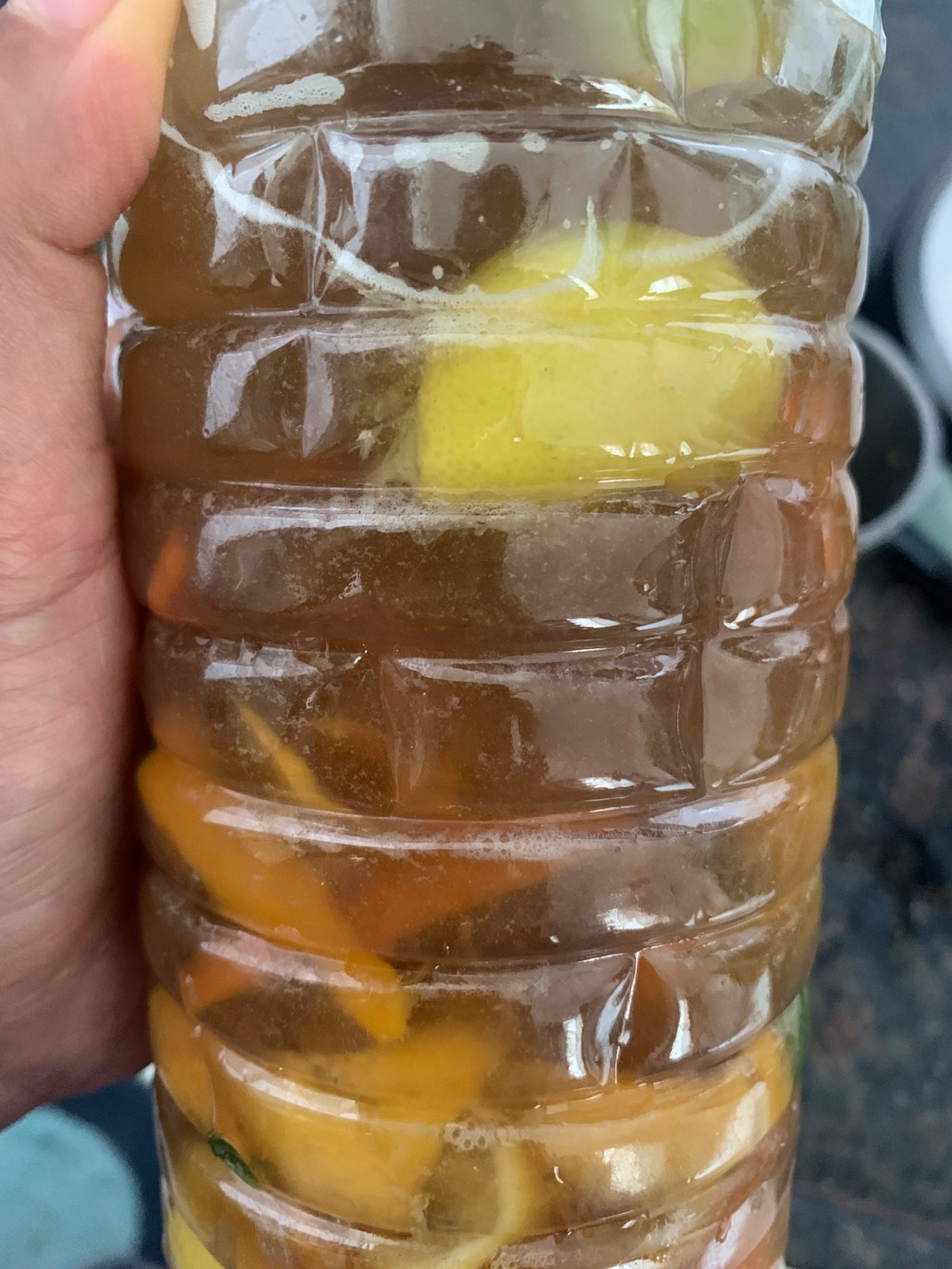
Say goodbye to expensive and toxic chemical-based room cleaners that not only dent your wallet but also pose risks to human health. These synthetic cleaners not only harm your indoor environment but also contribute to water pollution with their toxic residues. Over time, they can even damage your floors and tiles.
The solution? Homemade Bioenzymes – an eco-friendly, versatile cleaner that’s not only easy on your pocket but also on the planet. Learn how you can make the switch to a cleaner, greener, and safer cleaning routine.
Process of making Bioenzyme
- Begin with these ingredients: jaggery, citrus peel (or alternatives like carrot, cucumber, pineapple, sweet lime, or lettuce), and water. Maintain a ratio of 1:3:10. If you don’t have yeast, don’t worry – it’s optional. Without yeast, it may take up to 2.5 to 3 months to be ready. Alternatively, you can add pulp from the last batch to speed up the process.
- Combine all these components in a plastic bottle with a screw cap, leaving some space at the top, and allow them to ferment.
- Remember to stir the solution once daily to release the gases it generates.
- Throughout the fermentation period, ensure that the process occurs in anaerobic conditions.
- After the required time, strain the liquid and transfer it to a plastic bottle.
- Your homemade bioenzyme is now ready to be used for a variety of purposes.

Uses of Bioenzyme
Bioenzymes are indeed a versatile and eco-friendly option for various cleaning and household applications. Here’s a summary of the uses and benefits of using bioenzymes in your home:
- Cleaning Surfaces: Bioenzymes make excellent cleaners for various surfaces in your home, including glass windows, floors, and countertops. They effectively remove dirt and grime while being gentle on the environment.
- Cost-Effective Cleaning: Using bioenzymes can be more cost-effective than purchasing commercial chemical cleaners, saving you money in the long run.
- Eco-Friendly: Bioenzymes do not contain toxic chemicals, which means you can clean your home without harming the environment or exposing yourself to harmful substances.
- Kitchen Cleaning: Bioenzymes are ideal for cleaning greasy utensils and kitchen materials, making it easier to maintain a clean and hygienic kitchen.
- Insect Repellent: Bioenzymes can repel small insects, cockroaches, and ants when used as a cleaning solution. They help keep your home insect-free, especially during the summer.
- Deodorizing: You can use a diluted bioenzyme solution to deodorize any space in your home, leaving it smelling fresh and clean.
- Bathroom Cleaning: Bioenzymes are effective in removing stains in the bathroom, preventing damage to tiles and floors caused by harsh chemical cleaners.
- Tile and Grout Cleaning: Bioenzymes are recommended for cleaning tiles and grout because they can penetrate small cracks and crevices, removing soil and odors effectively.
- Drain Declogging: Bioenzymes can help unclog drains naturally, reducing the need for chemical drain cleaners.
- Limescale Removal: Bioenzymes can remove limescale deposits from taps and steel appliances, improving their efficiency and longevity.
- Pesticide for Fruits and Vegetables: Bioenzymes can be used to clean pesticides and chemicals from fruits and vegetables, making them safer to consume.
- Natural Pesticide: For gardeners, bio enzymes can be used as a natural and cost-effective pesticide to protect plants from pests without harming the environment.
Here is a list of Bioenzymes to start with
- Marigold/ Rose/ Flower Bioenzyme : natural room freshener, floor cleaning, facewash, bodywash, hand wash, etc.
- Citrus Bioenzyme (orange/ lemon peels): a natural cleanser, that can be used in shampoos, dishwashing, laundry, floor cleaners, toilet cleaners, etc.
- Neem Bioenzyme: Pesticide for plants, mosquito repellent, facewash, bodywash.
- Aloe Vera Bioenzyme: Facewash, shampoos, pesticide.
- Hibiscus Bioenzyme: Conditioner, shampoos.
- Tamarind Bioenzyme: Cleaning copper vessels.
- Shikakai Bioenzyme: Add with reetha and use as a natural shampoo.
- Lemongrass Bioenzyme: Mosquito repellent, can be used as a floor cleaner.
- Henna Bioenzyme: Shampoo preparation, add with shampoo.
- Soapnut Bioenzyme: All-purpose cleaner, natural shampoo, etc.
- Basil Bioenzyme: Cures skin-related problems, use for plants and skin.
- Garlic Bioenzyme: Pesticide.
- Banana Bioenzyme : Rich source of potassium for plants.
Note : Add 5 ml of Bioenzyme to 1 litre of water
I am happy to learn from you if I have missed something. Have you had experience making bioenzymes? Please feel free to share your suggestions or feedback in the comments below.
 CurlyGirlyTravely
Hey! I have made pineapple and citrus bioenzyme a few times. Would like to try the lemongrass one. Could you please share more details? Do we use lemongrass leaves instead of the fruit peels?
LikeLike
Hey Manas! That’s great! Yes, you can definitely make a lemongrass bioenzyme, and it’s a bit different from the fruit-based ones. You’ll use lemongrass leaves or stems instead of the typical fruit peels. Here are the details –
Ingredients: Lemongrass leaves or stems (you can mix with citrus peels for added benefits), sugar or jaggery, and water.
Ratio: The same ratio applies as with the fruit bioenzymes—1 part sugar, 3 parts lemongrass scraps, and 10 parts water.
Fermentation: Let it ferment for about 3 months, just like you did with the pineapple and citrus ones. Don’t forget to open the lid every day for the first 2-3 weeks to release gases.
You can use this enzyme for cleaning surfaces, floors, and even in the garden as a natural fertilizer. Let me know how it goes!
LikeLike