
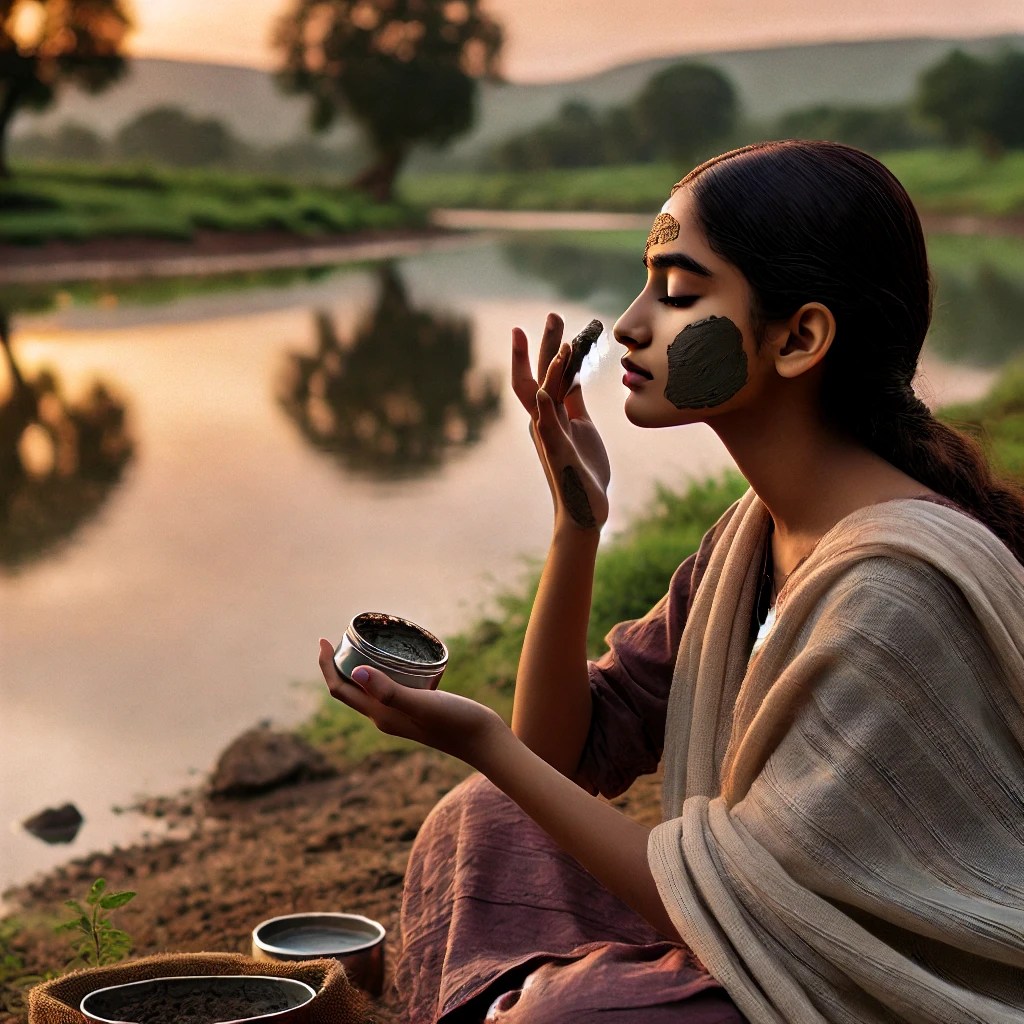
Clay is a natural ingredient that has been used for centuries to treat a variety of skin conditions. It is primarily composed of fine mineral particles and organic matter, with a unique ability to absorb moisture and impurities. There are many different types of clay, each with its unique set of benefits for different skin types.I personally love using clay on my face.
In Ayurveda, clay is valued for its natural healing and balancing properties. It is also used for balancing doshas ( Vata, Pitta, and Kapha )
Here’s a general categorisation of clay based on skin type
- Fuller’s Earth clay, also known as Multani Mitti, is popular clay, especially in India. It’s rich in magnesium chloride and is excellent at absorbing oil. This clay is often used to lighten the skin and treat acne. It’s also great for removing dead skin cells and controlling oil production.
- Bentonite Clay is ideal for oily skin types as it has excellent oil-absorbing properties. It’s rich in minerals like magnesium and silica, which help draw out toxins from your skin. This clay is especially good if you have oily skin or acne because it absorbs excess oil and tightens your pores.
- Kaolin Clay is a very gentle clay that is rich in kaolinite and silica. It’s perfect for people with sensitive skin because it cleanses without stripping away natural oils. Kaolin clay helps to mildly exfoliate your skin, leaving it feeling soft and smooth.
- French Green clay is rich in iron oxide, magnesium, and calcium. This clay is highly absorbent and is great for detoxifying your skin. It also helps improve circulation, making your skin look more radiant. French green clay is ideal if you have oily or combination skin.
- If your skin is dry, Rhassoul clay might be the best choice for you. This clay comes from Morocco and is rich in silica, magnesium, and potassium. It’s known for its moisturising properties and helps improve the elasticity of your skin. Rhassoul clay can also reduce dryness and flakiness.
- Pink clay is a gentle clay that’s rich in silica and iron oxide. It’s perfect for sensitive and mature skin because it revitalizes the skin and improves elasticity. Pink clay also helps reduce irritation and inflammation, making your skin look younger and more refreshed.
- For those with sensitive or dry skin, yellow clay is a great option. It’s rich in iron oxide and magnesium and helps to gently exfoliate and improve circulation. Yellow clay also tones the skin, giving it a healthy glow without causing irritation.
- Red clay is another clay that is beneficial for your skin. It’s rich in iron oxide and is known for improving blood circulation. This clay is great for normal to dry skin and can help reduce redness and brighten your complexion.
- Blue clay is less common but equally beneficial. It’s rich in minerals like silica, aluminium, and calcium. Blue clay is great for detoxifying the skin and reducing inflammation. It’s ideal for people with oily or combination skin because it helps purify and clarify the skin.
- Dead Sea clay is rich in minerals like magnesium, sodium, and potassium. This clay is known for its rejuvenating properties and is often used to treat skin conditions like psoriasis and eczema. Dead Sea clay helps hydrate and soften the skin, making it look healthier and more vibrant.
Fuller’s earth clay, also known as multani mitti, works really well for me. It absorbs excess oil, cleanses pores, exfoliates, and tightens the skin. Initially, I experienced some breakouts on my left cheek, but I continued using the clay. It healed the breakouts, leaving my skin soft and clean.
It’s important to note that while these are general categorizations, everyone’s skin is unique, and you may find that clay that is not typically recommended for your skin type works well for you. Always patch-test any new skincare ingredient and discontinue use if you experience any adverse reactions.
 CurlyGirlyTravely